
Last updated October 17, 2026
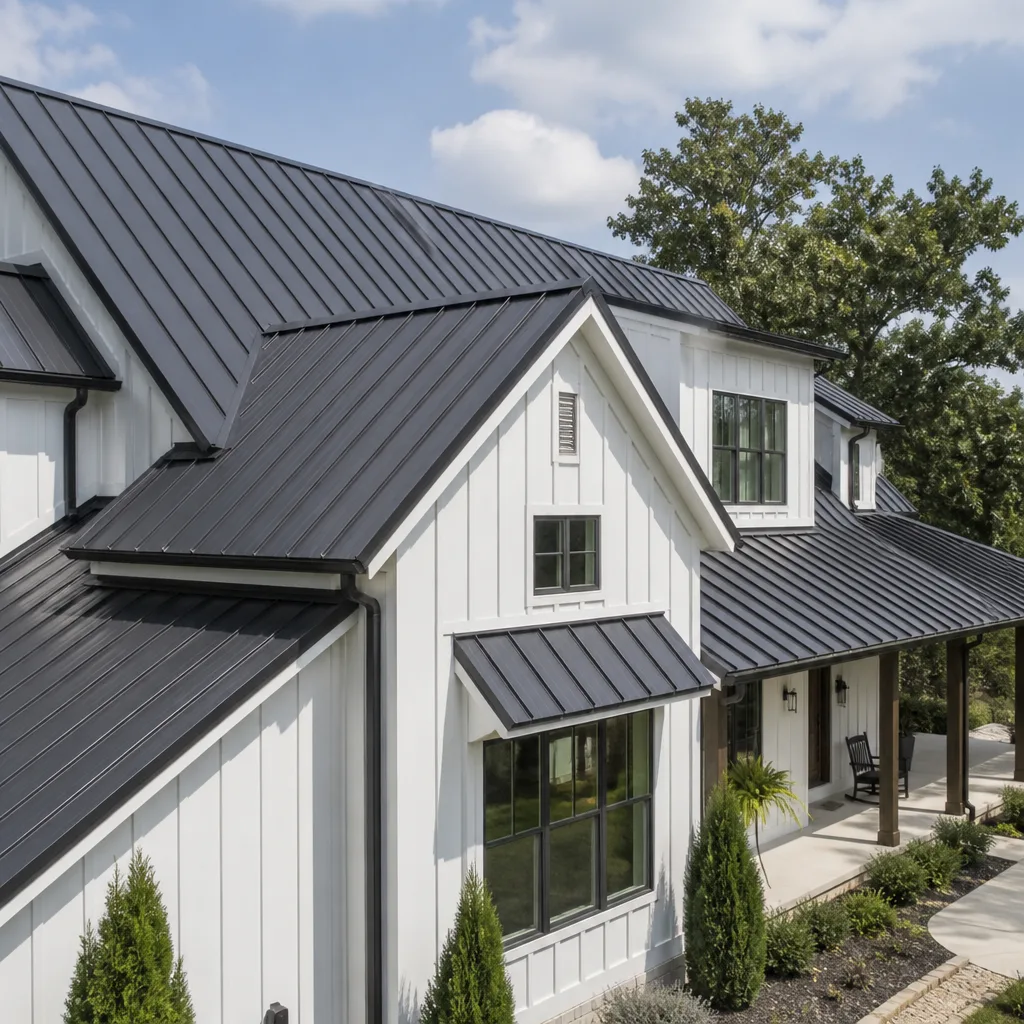 Metal roofing
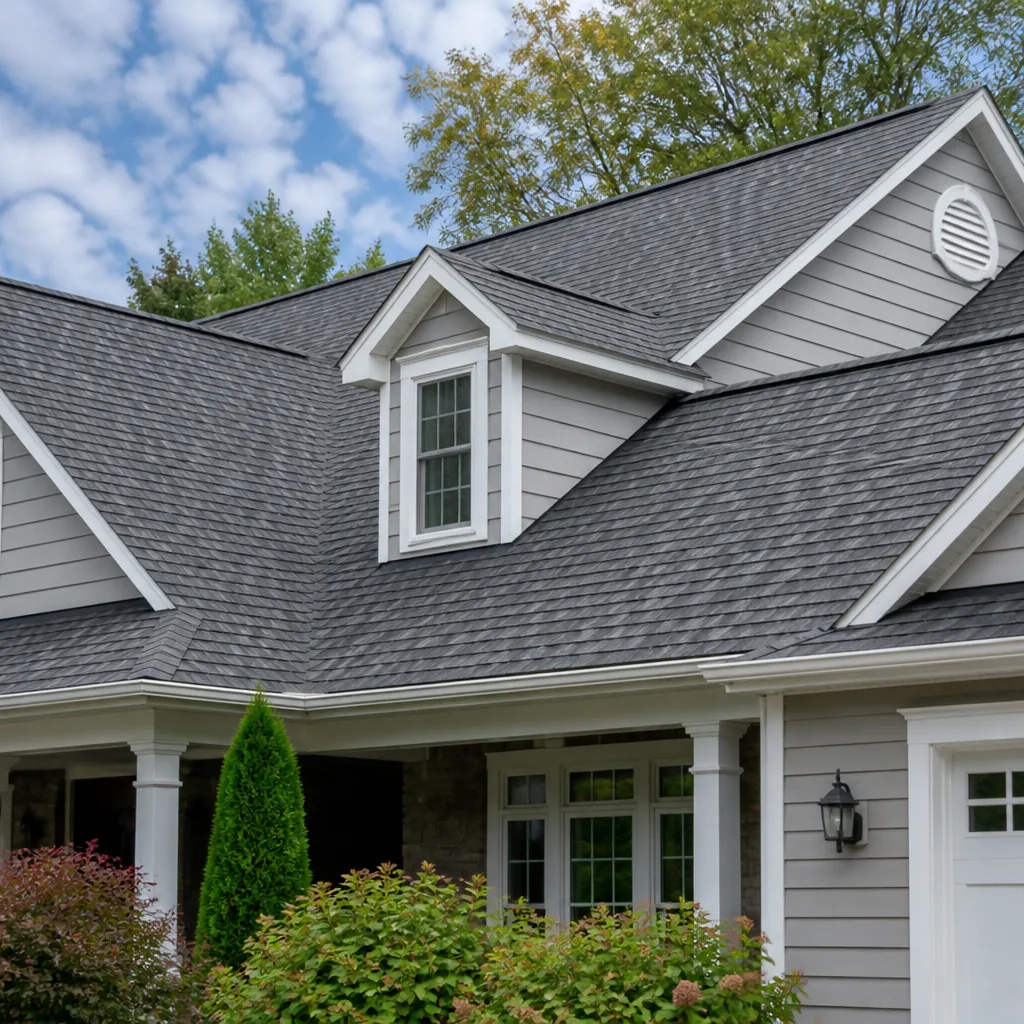 Architectural shingles
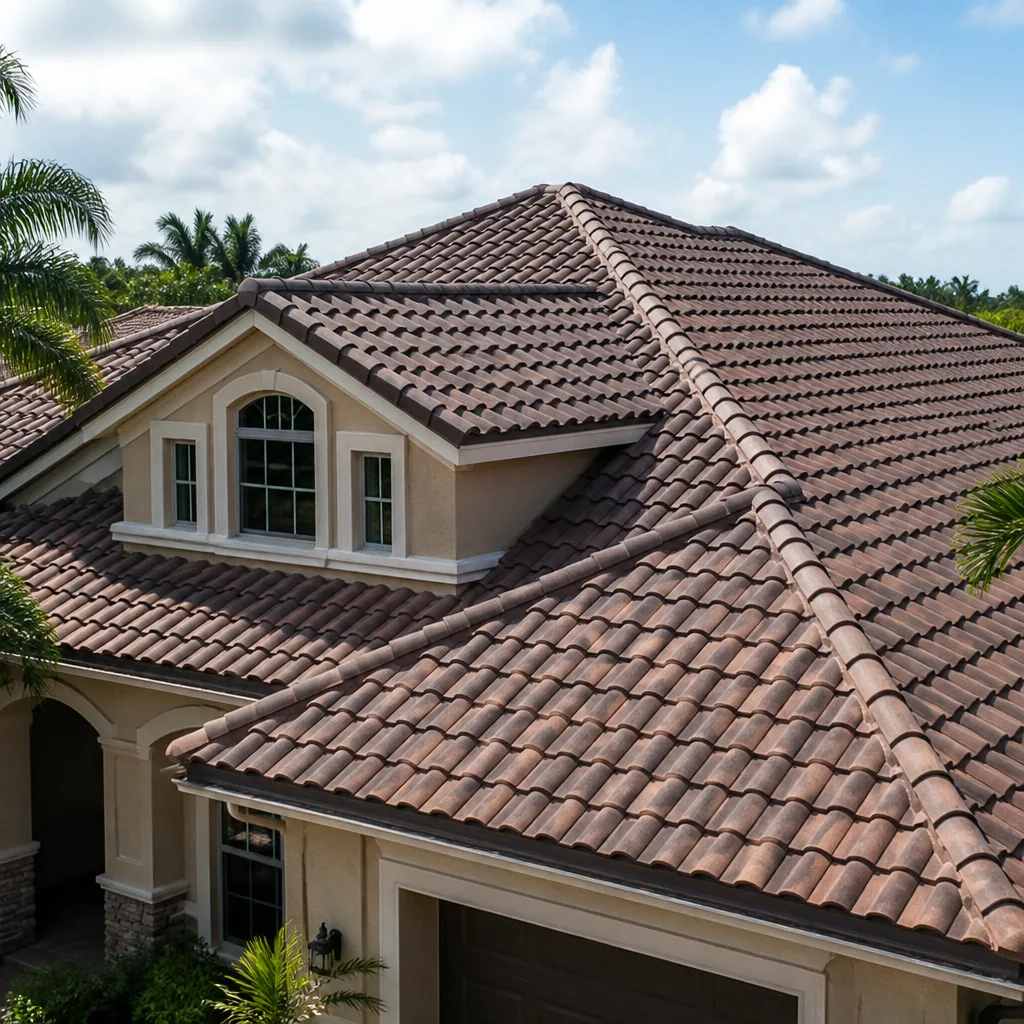 Tile roofing
 GAF
GAF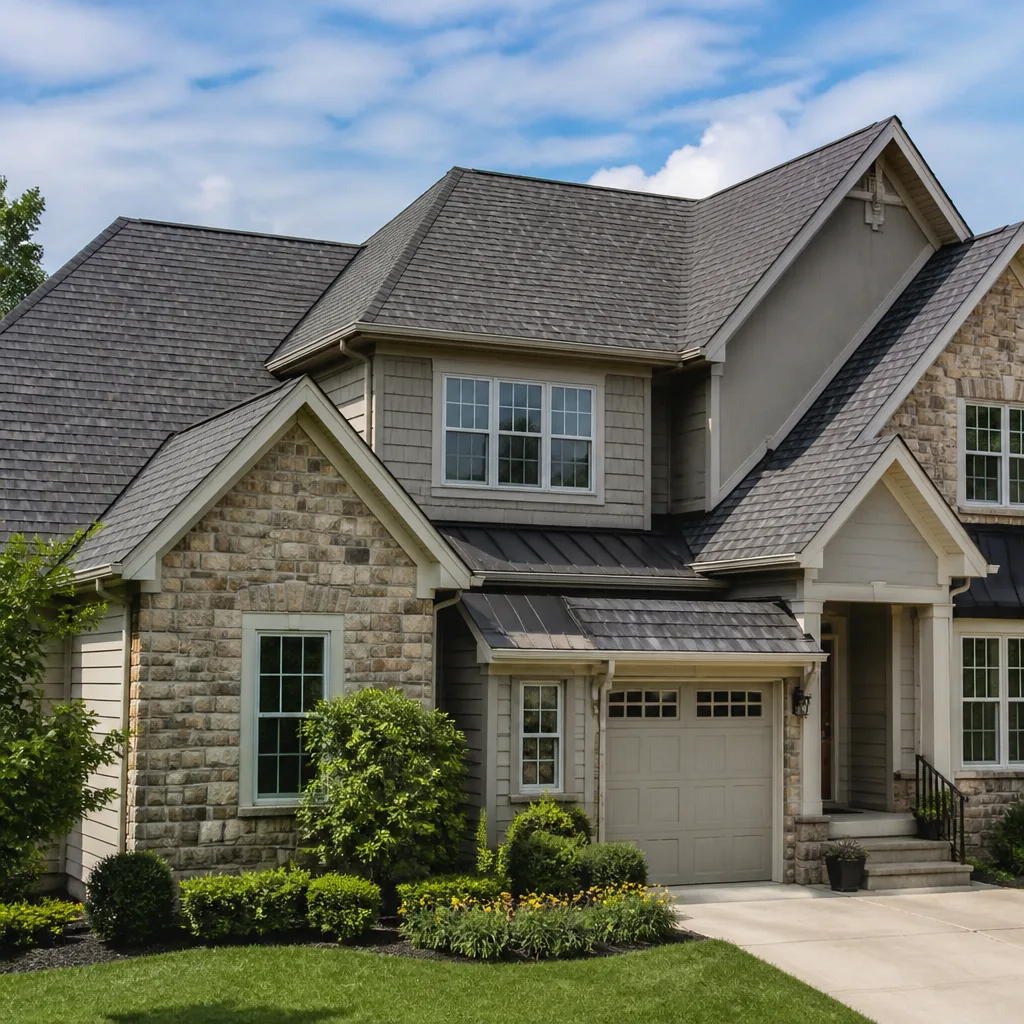 Owens Corning
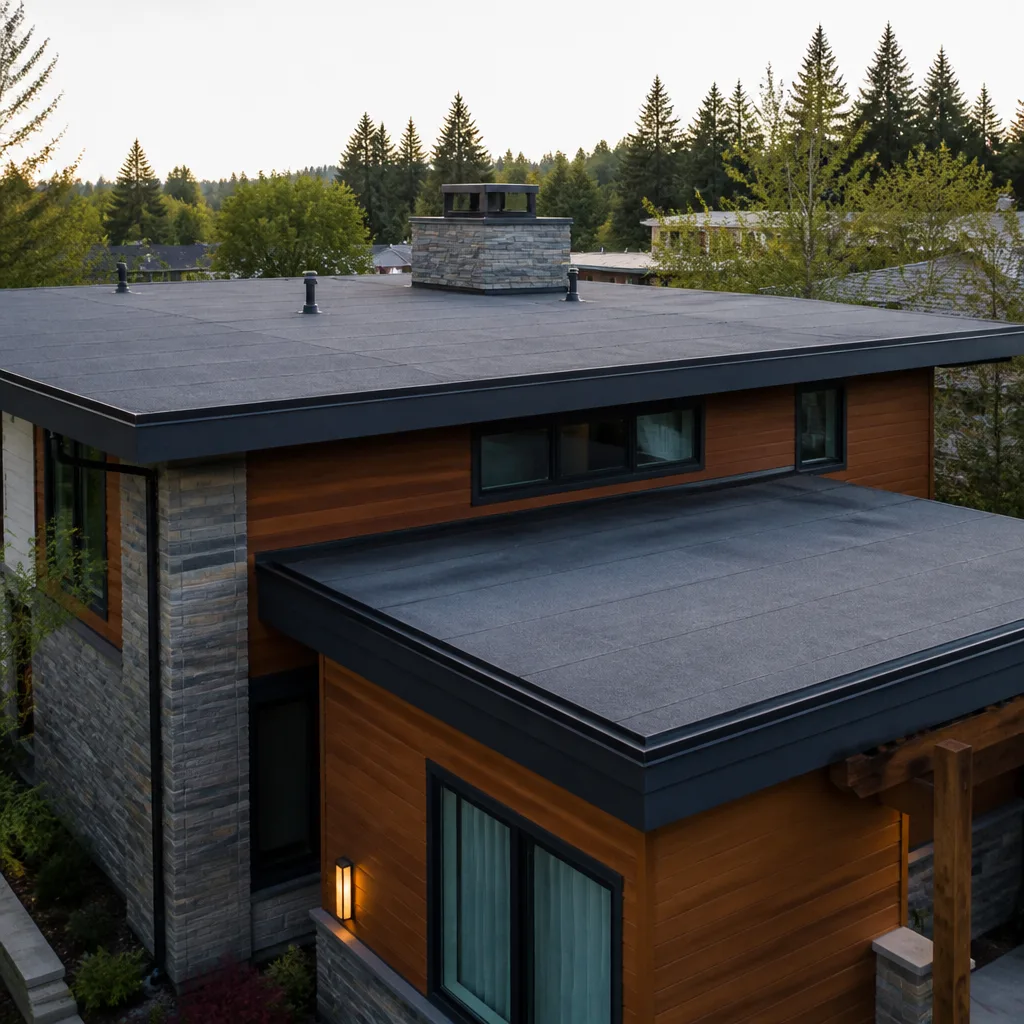 Flat & low-slope
Free roof inspection with deck photos before we talk money - GAF and Owens Corning certified installation
Roofing Warning Signs: A Fort Lauderdale Homeowner’s Reference Guide
The black streaking on roughly 70% of Fort Lauderdale roofs isn’t dirt. It’s Gloeocapsa magma, a cyanobacteria that South Florida humidity accelerates year-round, and it actively degrades asphalt shingles from the inside out while homeowners assume it’s a cosmetic issue. Our complete guide to roofing in Fort Lauderdale is built around what roof failure actually looks like here specifically: algae that eats shingle granules, wind-lifted tabs that mimic normal aging, and flat-roof ponding that silently rots decking. By the time you finish reading, you’ll know which warning signs demand a repair call this week, which ones you can monitor, and what each problem realistically costs to fix.
Styles & brands we work with
Quick Answer
The most common roof warning signs in Fort Lauderdale are black algae streaking on asphalt shingles, cracked or lifted shingle tabs along the windward edges, standing water on flat or low-slope sections that remains for 48 hours or more, ceiling stains that appear without AC condensation nearby, and deteriorated fascia boards. If you spot any of these, schedule a professional inspection promptly; most standard Fort Lauderdale roof repairs run $350 to $900, while ignored warning signs escalate to $8,000 to $25,000 replacements. For homeowners looking for Roof Repair in Fort Lauderdale, early detection is the single biggest money-saver available.
Table of Contents
- Algae vs. Mold vs. Lichen: What You’re Actually Seeing
- Wind Uplift Damage: Why Fort Lauderdale Tabs Crack Differently
- Flat and Low-Slope Roof Ponding: The 48-Hour Rule
- Interior Warning Signs: AC Condensation vs. Roof Intrusion
- Fascia and Soffit Deterioration: The Drainage Problem First
- Flashing Failures: Where Fort Lauderdale Roofs Leak Most
- Roof Age and Material Lifespan in South Florida
- Common Mistakes to Avoid
- When to Call a Professional
- Frequently Asked Questions
- The Bottom Line
Algae vs. Mold vs. Lichen: What You’re Actually Seeing
Most Fort Lauderdale homeowners use “mold” as a catch-all for anything dark on a roof. That imprecision costs money, because each organism requires a different response and a different repair budget. Let’s separate the three.
Algae is the black streaking you see on north-facing and tree-shaded roof slopes. In Fort Lauderdale, the culprit is almost always Gloeocapsa magma, a cyanobacteria that arrived in Florida decades ago and thrives in our humidity. It feeds on the limestone filler inside asphalt shingles. As it spreads, it releases the granules that protect the shingle from UV radiation. The streaking looks bad, but the real problem is granule loss, which shortens shingle lifespan by accelerating UV breakdown. Algae does not cause leaks directly, but it sets the stage for premature failure.
Mold on a roof surface is rarer and looks fuzzy or splotchy rather than streaked. It typically appears in areas where organic debris, such as leaves or pollen, accumulates and holds moisture. Unlike algae, mold does not eat shingle filler, but it signals a drainage problem. If one section of roof stays damp long enough to grow mold, water is not leaving that area the way it should.
Lichen is the most aggressive of the three. It appears as crusty, pale green or gray patches with a slightly raised texture, and it sends root-like filaments into the shingle surface. Lichen physically pries granules loose and can lift shingle edges. In Fort Lauderdale’s wet season, lichen spreads quickly on shaded roofs and along valleys. We see it most often on homes in Sailboat Bend and Riverside, where mature tree canopies block the sun.
How to Respond to Each
- Identify what you have. Streaked and dark: algae. Fuzzy and patchy: mold. Crusty and raised: lichen.
- Algae: A soft-wash treatment with a sodium hypochlorite solution kills the organism and restores appearance. Expect to pay $250 to $500 for a professional soft wash on a typical 1,800-square-foot Fort Lauderdale home. Recurrence is likely within 24 to 36 months without preventive zinc or copper strips.
- Mold: Fix the drainage issue first. Clearing debris from valleys and gutters often resolves it. Do not pressure-wash; high-pressure water drives moisture under shingles and voids manufacturer warranties.
- Lichen: This requires mechanical removal followed by soft wash, and even then the shingles may be damaged beyond recovery. If lichen covers more than 25% of a slope, plan for replacement rather than cleaning.
The lesson is that what looks like one generic problem is often three different problems with three different price tags. Getting the identification right before calling a roofer, or reading our DIY vs Professional Roofing: The Fort Lauderdale Homeowner’s Decision Guide, means you’ll know if a $400 wash is money well spent or money thrown at a roof that needs replacement.
Wind Uplift Damage: Why Fort Lauderdale Tabs Crack Differently
Fort Lauderdale sits in a high-velocity hurricane zone, but the roof damage that most concerns us is not the dramatic photo of a tree through a roof. It’s the quiet, cumulative wind-uplift damage that happens during ordinary summer thunderstorms and the occasional tropical storm warning. This damage presents differently than what a roofer from, say, Indianapolis would recognize.
In colder climates, wind damage usually shows as visibly missing shingles or obviously curled tabs. In South Florida, the combination of heat and wind produces something subtler: cracked tabs at the bond line. The sealant strip that bonds one shingle to the next softens in our afternoon sun, and then a wind gust lifts the tab just enough to stress the bond. The top layer separates from the bottom layer without the tab ever blowing off. From the ground, the roof looks fine. From the attic, the shingle is compromised, and the next strong storm finds the weak point.
How wind uplift presents in Fort Lauderdale specifically
- Shingle tabs that feel “spongy” underfoot but appear flat from the curb
- Shingles that have shifted slightly, leaving a horizontal seam visible where none existed before
- Granule accumulation in gutters after ordinary storms, not just hurricanes
- Cracks running along the edge of the shingle where it meets the sealant strip, rather than perpendicular to it
- Interior leaks that appear not during a storm but days later, after water slowly migrates through the underlayment
We see this pattern most often on the eastern and southeastern roof slopes in neighborhoods like Victoria Park and Rio Vista, the sides that take the brunt of onshore wind from the Atlantic. The fix is usually localized: resealing tabs or replacing 6 to 12 shingles runs $300 to $550. The problem is that homeowners don’t know the damage exists until a leak appears, and by then the underlayment may already be compromised.
If you’re unsure whether your roof has wind-uplift damage, the 365-Day Done Right Promise from Crestview Roofing Co Fort Lauderdale home means any repair we identify and complete is covered in writing for a full year. That guarantee matters most after the first big storm of the season, which is when hidden wind damage reveals itself.
Flat and Low-Slope Roof Ponding: The 48-Hour Rule
Flat roofs are common on mid-century Fort Lauderdale homes, particularly in neighborhoods like Coral Ridge and Imperial Point where the classic Florida ranch and modern low-profile designs dominate. A low-slope or flat roof is not a problem by itself. Standing water becomes a problem on a specific, predictable timeline.
The industry standard, echoed by the National Roofing Contractors Association, is that water should drain from a low-slope roof within 48 hours after rain stops. In Fort Lauderdale’s summer wet season, that window can be tight. Brief afternoon showers at 3 p.m. are often followed by another shower the next afternoon, and the roof never fully dries. That’s not necessarily a defect. The 48-hour clock restarts after the last rain, and a roof that drains within two days is functioning as designed.
When water remains beyond 48 hours repeatedly in the same locations, the membrane begins to break down. Here’s what ponding actually does, in sequence:
- UV degradation accelerates. Water acts as a magnifying lens for sunlight, concentrating UV radiation on the membrane beneath the pond.
- Membrane elasticity decreases. Constant moisture causes polymer breakdown in modified bitumen and TPO membranes, making them brittle.
- Seams begin to separate. Where membrane sheets were heat-welded, constant ponding weakens the weld line.
- The insulation underneath saturates. Once water penetrates the membrane, it pools inside the insulation board, adding weight and initiating rot.
- The deck rots. Plywood or OSB decking fails under sustained moisture. At this stage, the repair is no longer roof-level. It’s structural.
In Fort Lauderdale, we cross from maintenance to structural concern at the third stage. If a homeowner sees visible seam separation or feels soft spots when the roof is walked, the deck is often already involved. The fix at stage one or two is a tapered insulation system or a new drainage path: roughly $1,500 to $4,000 on a standard flat roof section. The fix at stage five is a full tear-off and redeck: $12,000 to $20,000.
The practical rule: after any significant rain, if you can see pooled water on your low-slope roof from a window or ladder for more than two dry days, call for an inspection. That call costs nothing and prevents the most expensive repair in residential roofing.
Interior Warning Signs: AC Condensation vs. Roof Intrusion
Every summer, Fort Lauderdale homeowners call us about ceiling stains that turned out to be roof leaks. But almost as often, they call about roof leaks that turn out to be air conditioning condensation. Telling the difference before you call anyone saves you either an HVAC bill or a roofing bill for a problem that doesn’t exist.
AC condensation stains appear near ceiling registers, air handler closets, or along duct runs in the attic. They usually show as a soft, diffuse, yellowish-brown ring that grows slowly. Crucially, they do not correspond to rain events. If a stain appears during a week with no rainfall, it is almost certainly condensation. High-humidity July in Fort Lauderdale can produce condensation stains on days when the attic temperature exceeds 120°F and the AC runs continuously.
Roof intrusion stains behave differently. They appear as a defined, often circular patch, frequently with a darker center and a lighter outer ring. The stain may develop within 24 to 72 hours after a rain event. In South Florida, it’s often accompanied by a faint musty odor that increases when the AC cycles on and pulls air from the attic through ceiling penetrations.
Four checks to tell the difference
- Correlate with rain. If the stain appeared after rain and grows with subsequent rain, it’s roof intrusion.
- Check the location. Stains under a bathroom vent, near a chimney, or at the edge of a ceiling where the wall meets the roof line are typically roof leaks. Stains around an AC register are typically condensation.
- Test the texture. After the area dries, a roof leak stain often feels slightly rough or raised, because it contains dissolved minerals from the roofing material. Pure condensation stains feel soft and smooth.
- Look in the attic. This is the definitive step. In the attic, a roof leak shows as a water trail, often tracing along a rafter or down-roof truss, that ends at the stain. Condensation shows as beads on duct surfaces or damp insulation near the attic floor, without any corresponding roof deck wetness.
If the attic inspection points toward the roof, the most common entry points in Fort Lauderdale are nail holes from the original installation, deteriorated pipe boot flashings, and failed sealant around attic vents. A pipe boot replacement runs $175 to $300. A vent reflash runs $250 to $400. Both are straightforward fixes that stop interior damage early. For a full assessment, a Roof Installation in Fort Lauderdale professional can trace the leak source even when the water path is indirect.
Fascia and Soffit Deterioration: The Drainage Problem First
Fascia is the vertical board that runs along the roof edge, the one your gutters are mounted to. Soffit is the horizontal underside of the roof overhang. In Fort Lauderdale, both rot faster than in almost any other Florida climate because of the combination of salt air in beachside neighborhoods, year-round humidity, and intense afternoon rainfall.
Here’s what competitors miss: fascia and soffit rarely rot on their own. They rot because a roof drainage issue puts water on them for years. Overfull gutters, clogged downspouts, missing drip edge, and shingles that overhang too far all send water cascading against the fascia board every time it rains. Once the paint film cracks, moisture enters the wood, and the board rots from the inside.
In Fort Lauderdale, the problem accelerates because our rain comes in short, intense bursts. The volume of water overwhelms gutters that were sized for lighter rainfall, and the overflow runs directly down the fascia. This is a roof drainage problem first and a wood problem second. Fix the drainage and the wood stops deteriorating. Skip the drainage and replacing the wood is wasted money.
The cost difference matters. Replacing 20 linear feet of damaged fascia and soffit on a typical 1,500-square-foot Fort Lauderdale home runs $4,000 to $8,000 by the time you factor in paint matching, gutter removal and reinstallation, and wood replacement. The drainage fix behind the rot, such as adding drip edge or correcting shingle overhang, often costs under $600. Catching fascia rot early, before the gutter pulls away from the rafter tails, is one of the clearest examples of a small roof repair preventing an expensive exterior repair.
If you see peeling paint on the fascia, especially in vertical stripes directly below a gutter seam or at the corners of the house, do not repaint. Look upward first. In our experience across Fort Lauderdale, homes in Middle River Terrace and Lake Ridge are particularly prone because of the age of their original wood fascia and the density of surrounding trees that drop leaves into gutters weekly.
Flashing Failures: Where Fort Lauderdale Roofs Leak Most
Flashing is the metal strip, often galvanized steel or aluminum, that seals the joints where the roof meets something else: a chimney, a skylight, a plumbing vent, a wall, or a valley where two slopes meet. Every penetration in a roof is a potential leak, and flashing is what prevents it. In South Florida, flashing fails earlier than the shingles themselves in the majority of roofs we inspect.
Why? Three reasons. First, our intense UV exposure degrades the sealant used around flashing faster than in northern climates. Second, the thermal expansion cycle, where a Fort Lauderdale roof goes from 60°F in January to 140°F surface temperature in July, repeatedly works the metal loose from the substrate it was sealed to. Third, salt air in coastal neighborhoods like Harbor Beach and Nurmi Isles accelerates metal corrosion at the flashing edge.
Step flashing is the series of L-shaped metal pieces that weave between shingles and a vertical wall. It fails when the sealant dries and cracks, and water then runs behind the metal. Chimney flashing fails at the corners, where the metal bends around the chimney and two different angles meet. Pipe boot flashing is the rubber gasket around plumbing vents, and in Fort Lauderdale the rubber cracks from UV exposure within 8 to 12 years, faster than the shingle warranty period.
The fix for most flashing is straightforward and inexpensive relative to the damage it prevents. Resealing a pipe boot runs $150 to $250. Replacing step flashing on one wall section runs $400 to $700. The key is to address it before the leak has been running for months. Water that enters at the flashing line travels sideways along rafters before it ever shows up as a ceiling stain, so by the time you see the stain, the leak has been active far longer than you think.
Roof Age and Material Lifespan in South Florida
A roof in Fort Lauderdale does not last as long as the manufacturer’s warranty suggests. The warranties on 30-year architectural shingles assume the roof is installed in a temperate climate and maintained regularly. South Florida conditions, UV intensity, humidity, salt air, and daily thermal cycling, reduce the realistic lifespan of even the best asphalt shingle roofs to roughly 15 to 18 years.
Materials from manufacturers like Owens Corning and IKO are built with South Florida in mind, and their architectural lines include UV-stabilized granules and enhanced wind resistance. But the material is only half the equation. Installation quality determines whether that 30-year shingle performs for 15 or 18 years, and the difference between 15 and 18 years is significant when you’re spreading the cost over the roof’s life.
Age matters because warning signs appear on predictable timelines:
- Years 1 to 5: Installation issues surface: nail pops, minor flashing leaks, shingle misalignment. These are repair items, not replacement signals.
- Years 6 to 10: UV granule loss begins. Roof feels stiffer. Algae streaks appear on shaded slopes. Small wind-uplift damage possible after tropical storms.
- Years 11 to 15: Granule loss accelerates. Flashing sealant fails. Pipe boots crack. This is the active repair phase where annual inspections pay for themselves.
- Years 16 to 20: Shingles become brittle. Curling at edges appears. Wind damage becomes cumulative. Most Fort Lauderdale roofs reach the end of their service life in this window.
- Years 20+: Survival beyond 20 years indicates excellent installation and consistent maintenance, but replacement should be planned rather than urgent.
If you don’t know how old your roof is, check the building permit records available through Broward County, or have the roof assessed during a routine inspection. The age informs which warning signs are normal aging and which signal an immediate problem. For homeowners weighing repair vs. Roof Replacement in Fort Lauderdale, age is the single most important factor in the decision.
Common Mistakes to Avoid
- Power-washing a dirty roof. High-pressure water drives moisture under shingles. In Fort Lauderdale, where roofs stay damp for hours after rain, that trapped moisture accelerates deck rot. Use soft-wash treatments or low-pressure cleaning only.
- Ignoring algae because it’s “just cosmetic.” The organism eats the limestone filler that gives shingles their structure. Every year of visible streaking is a year of accelerated granule loss.
- Caulking over rotted fascia and repainting. The rot continues underneath, and the paint fails again within a season. The drainage issue above the fascia must be addressed first.
- Assuming a new roof means no maintenance. Even a roof installed with Atlas or Tamko architectural shingles needs annual fastener checks and flashing inspections in South Florida’s storm climate.
- Waiting until a leak appears before inspecting the attic. By the time water reaches the ceiling, it has often been traveling through the roof system for weeks. Biannual attic checks catch intrusion earlier.
- Replacing shingles over rotted decking. Some contractors will nail new shingles to a deck that’s already compromised, because the homeowner won’t see the deck during the job. A transparent roofer documents the deck condition with photos before installation begins.
When to Call a Professional
Call a professional when you see any warning sign that indicates active water intrusion or imminent structural compromise. That includes ceiling stains that correlate with rain, soft spots on a flat roof, fascia that crumbles when you press it, flashing that has separated from the wall, and shingle tabs that feel loose underfoot. The common thread is water, and water damage compounds. A $400 flashing repair today prevents a $6,000 ceiling and insulation replacement next year.
Crestview Roofing Co Fort Lauderdale offers free estimates in Fort Lauderdale, with a written price delivered before any work starts, so the number you’re quoted is the number you pay. Call (754) 354-8628 to schedule an inspection, and you’ll always know who is coming, when they’ll arrive, and what the job will cost.
Frequently Asked Questions
The first warning signs are usually black algae streaks on asphalt shingles, granules collecting in gutters after ordinary storms, and ceiling stains that appear within days of rain. In Fort Lauderdale specifically, watch for shingle tabs that feel loose when walked, even if the roof looks fine from the ground. Call (754) 354-8628 for a free inspection if any of these appear.
Most standard Fort Lauderdale roof repairs run $350 to $900, including flashing reseals, pipe boot replacements, and localized shingle repair. Larger repairs such as flat-roof membrane patches or fascia replacement run $1,500 to $4,000. Full replacements typically fall between $8,000 and $25,000 depending on roof size and material. Crestview Roofing Co Fort Lauderdale provides a written price before any work starts, so the quote you receive is the amount on the final invoice.
Black streaking is Gloeocapsa magma, an algae that feeds on the limestone filler in asphalt shingles and releases the protective granules. It does not cause leaks by itself, but it shortens shingle lifespan by exposing the asphalt to UV radiation. South Florida humidity makes this problem worse than in most climates, and a professional soft wash typically runs $250 to $500.
Check whether the stain correlates with rain events. A roof leak stain grows after rainfall, often has a darker center, and may trace to a roof penetration visible in the attic. An AC condensation stain appears even during dry weather, usually near a register or duct run, and has a diffuse, soft-edged look. When in doubt, inspect the attic: roof leaks leave a water trail along rafters.
A well-installed asphalt shingle roof in Fort Lauderdale typically lasts 15 to 18 years, despite manufacturer warranties of 25 to 30 years, because South Florida UV exposure, humidity, and salt air accelerate wear. Flat and low-slope membranes usually last 12 to 15 years before requiring replacement. Annual inspections after year 10 help identify repairable issues before they become replacement-level problems.
Yes. Call (754) 354-8628 to schedule a free estimate in Fort Lauderdale. Every inspection includes a written price delivered before any work begins, backed by The Relay Visibility Guarantee, with before-and-after photo documentation and a trackable arrival time so you know exactly who is coming and when.
The Bottom Line
Fort Lauderdale roofs fail in specific, predictable ways, and most of them are visible to a homeowner who knows what to look for. Algae streaking is not cosmetic; wind-uplift damage hides at the bond line; ponding on a flat roof follows the 48-hour rule; and fascia rot is almost always a drainage problem in disguise. The common thread is that early detection turns expensive replacements into affordable repairs. We created this guide and our Seasonal Roofing Care for Fort Lauderdale: Year-Round Homeowner’s Guide so homeowners can identify problems before they become five-figure surprises, and we stand behind every repair we make with the 365-Day Done Right Promise, in writing, on every job.
Written by Dylan Pace, Owner at Crestview Roofing Co Fort Lauderdale, serving Fort Lauderdale since 2000.
See the difference
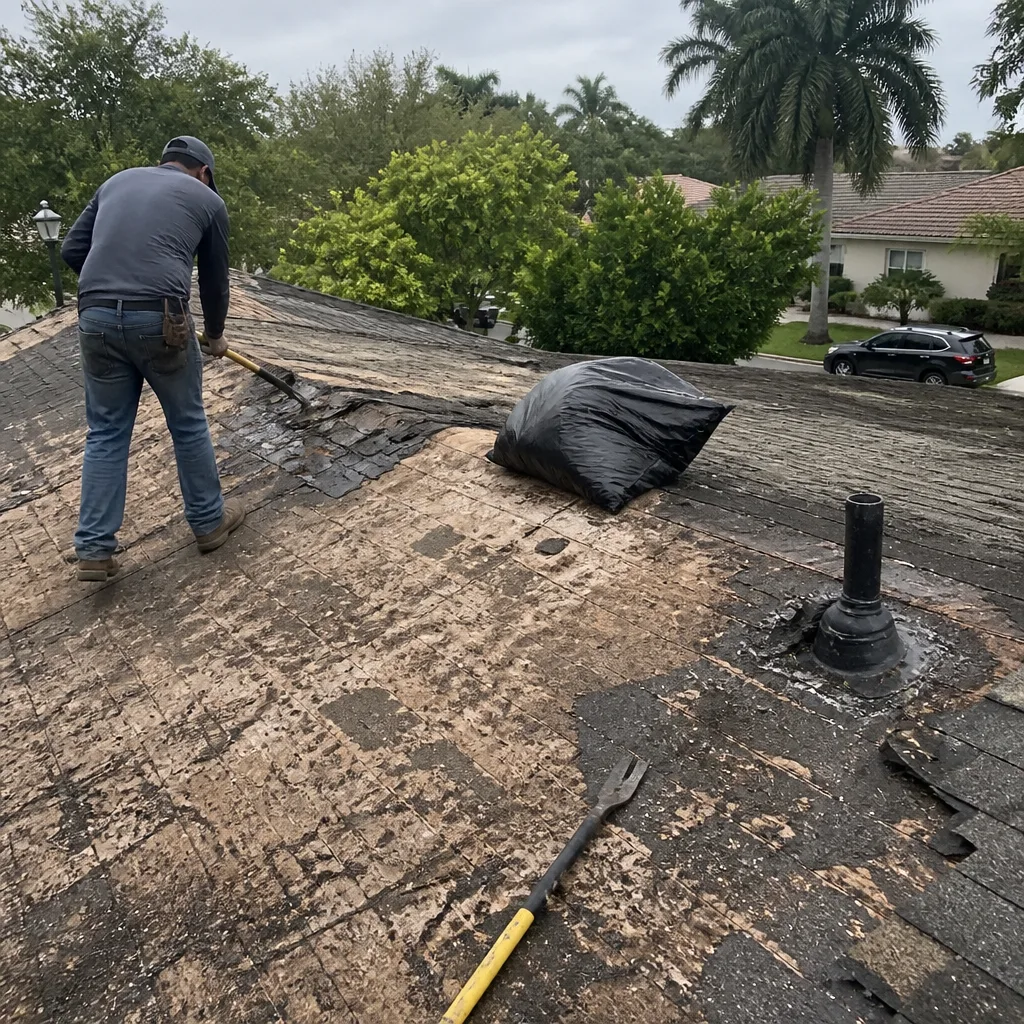 Before
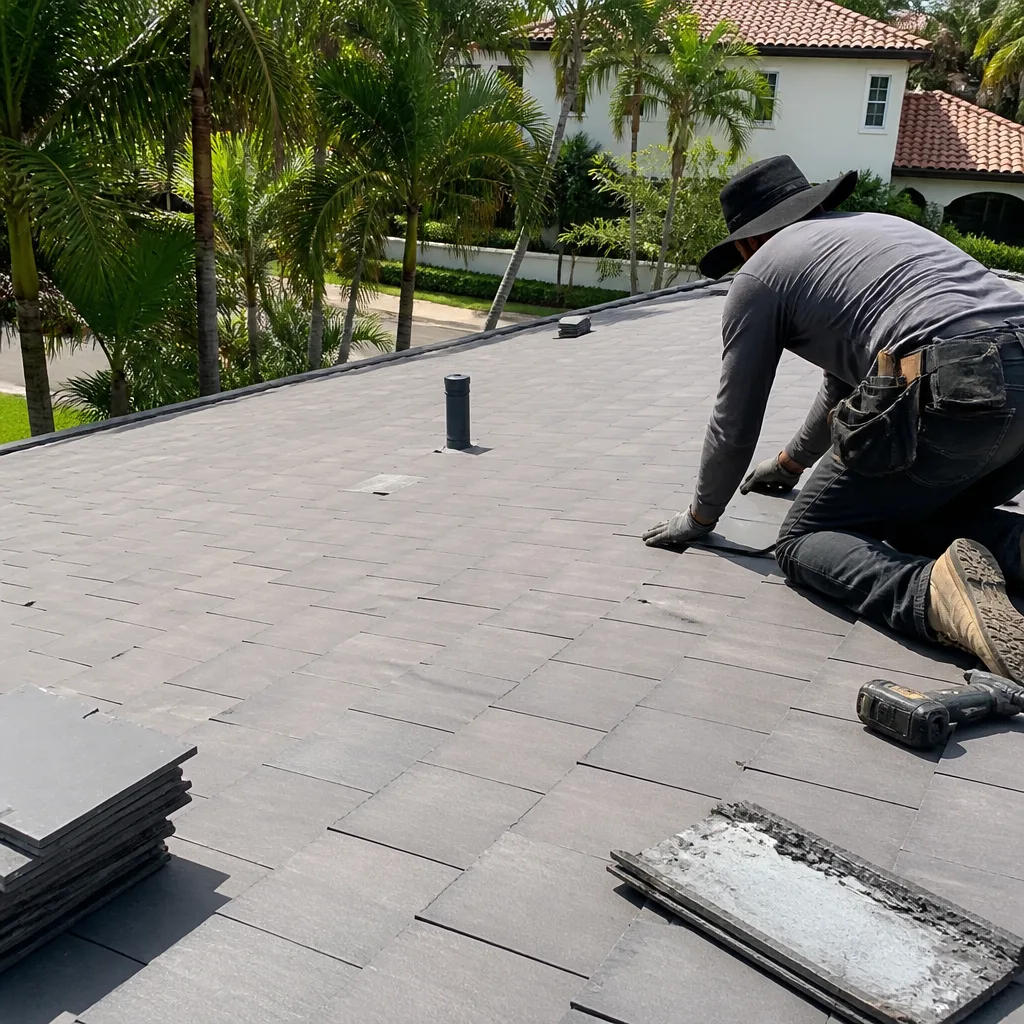 After
After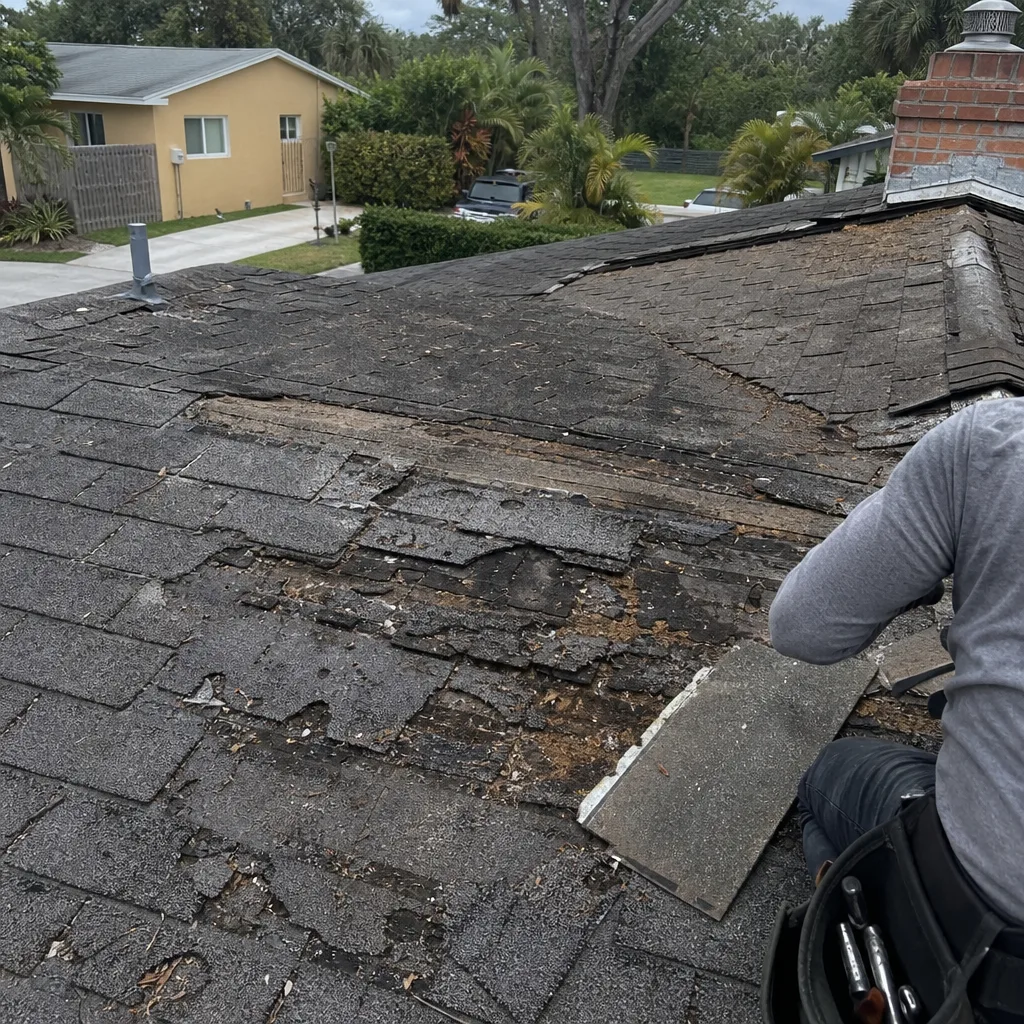 Before
 After
After Before
 After
After